Infographic
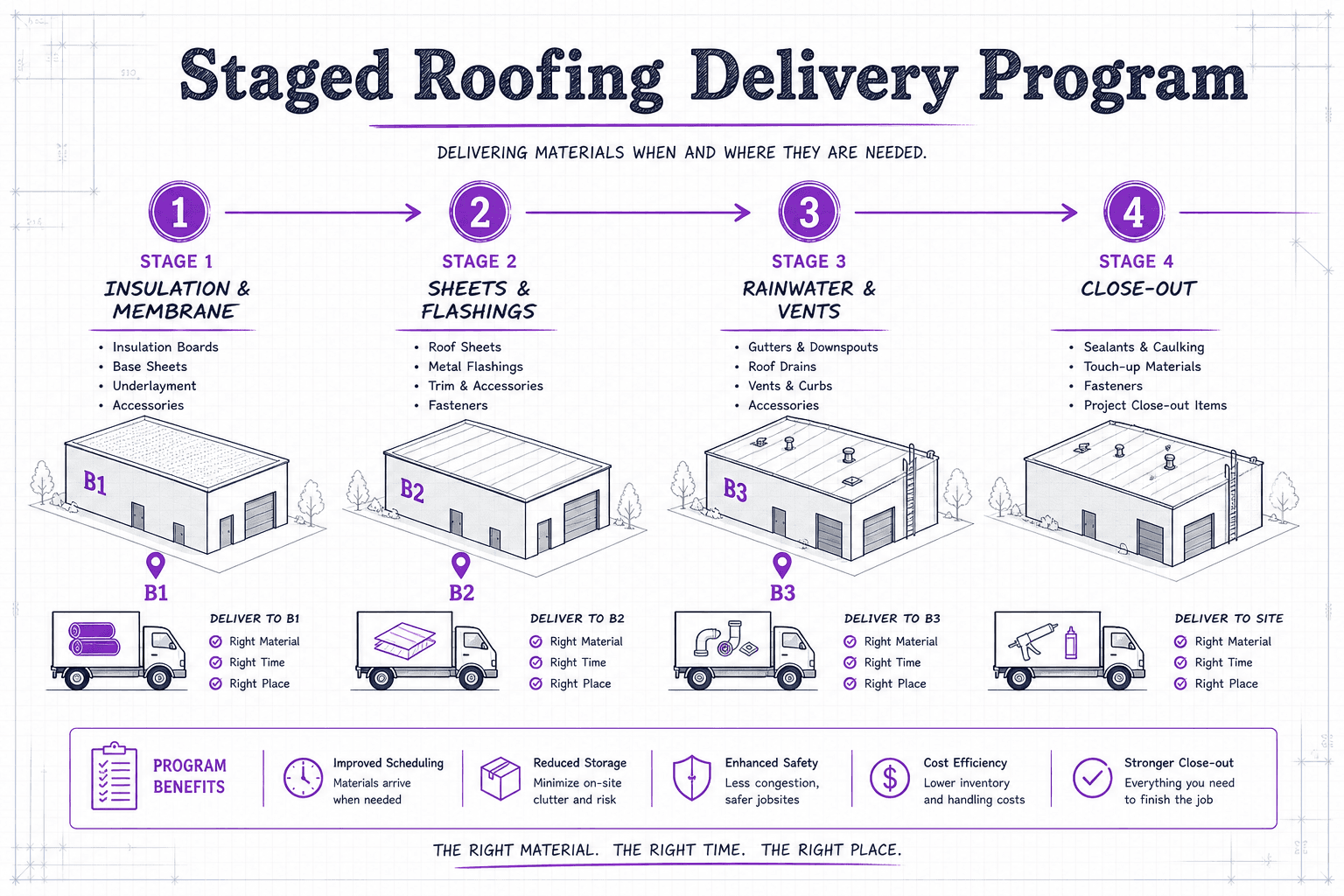
A 12-lot industrial estate or multi-stage school build does not want twelve identical truck loads arriving in week one. Site laydown fills with insulation rolls nobody will touch for months, roof sheets get damaged by other trades, and the builder pays for double handling. Staged delivery aligns roofing supply with how crews actually work — and it is standard practice on commercial programs PREZO services across Melbourne and regional Victoria.
Why staging matters
Commercial roofing materials are bulky, weather-sensitive and often colour-batch critical. Problems from poor delivery timing include:
- Damage and theft — loose sheet stacks on open sites
- Batch colour variation — reordering sheets months later may not match the first lift
- Cash flow — paying for an entire estate's roof package before slab one is poured
- Site congestion — blocking crane paths with insulation pallets
Staging trades warehouse space at PREZO Campbellfield for your program, not the other way around.
How PREZO structures stages
A typical multi-building program splits into logical drops:
Stage 1 — Substructure-ready buildings Mesh, roofing blankets, sarking, tapes and fixings for buildings entering roof install. Sized per building or per crane day.
Stage 2 — Sheet and flashing lift Roof sheets, ridge, barges and profile-specific accessories timed to weather windows and crane availability. Colour batch locked across the stage.
Stage 3 — Rainwater and vents Often follows facade or scaffold progress. Gutters, downpipes and vent modules delivered when the install crew is ready — not buried under earlier materials.
Stage 4 — Variations and close-out Penetration flashings, additional sheets from plan changes, maintenance spares.
Each stage maps to a purchase order line or release notice so your QS tracks spend against program milestones.
Information we need upfront
To build a delivery schedule that holds on site:
- Master program with building IDs and target roof dates
- Crane or telehandler availability and lift constraints
- Site access hours, gate restrictions and induction requirements
- Laydown zones per stage — slab areas, hardstand limits
- Single contact for release authorisation (site manager or roofing foreman)
Without this, schedules default to "when the truck is free" — which fails during Melbourne weather weeks.
Pack lot alignment
Staged delivery works best when each drop is a complete installable pack for that building — not random partials. Cross-reference our pack lot specification guide:
- Do not deliver screws in stage 3 if sheets arrive stage 2
- Include tapes and foam fillers with the sheet lift
- Match insulation delivery to the crew that installs it before sheet
PREZO's trade desk can tag each line item with building number and stage code on the picking slip.
Long-lead and custom items
Custom flashings, wide-span box gutter sections and specialty vent curbs may need longer lead times than standard sheet stock. Flag these early:
- Order long-lead items with buffer against critical path
- Hold at PREZO warehouse until release — avoids site damage
- Do not split colour-critical flashings across uncoordinated batches
If a building's roof date moves forward, communicate releases at least 48–72 hours ahead for metro Melbourne — more for regional Victoria.
Communication rhythm
Successful programs use a simple cadence:
- Weekly — confirm upcoming releases against weather and crew
- 48 hours before — confirm access and placement (hi-ab vs tailgate)
- On delivery — picking slip checked against stage BOM; report shortages immediately
Photos of damage on arrival speed replacements — do not install dented sheets hoping nobody notices.
Cost implications
Staging is not an extra service charge mentality — it is waste reduction. Fewer damaged materials, less site hire for storage containers, and roofing crews staying productive because the right pack arrived the morning of the lift.
Where projects need extended hold at our warehouse, discuss storage duration at quote stage. Short holds are often absorbed on large programs; long open-ended storage may need arrangement.
When staging is non-negotiable
- Multi-building estates with rolling roof dates
- City sites with no laydown — just-in-time delivery to crane hook
- School and healthcare projects with strict site access windows
- BAL or high-spec projects where product substitution cannot occur mid-program
Start the conversation early
Bring PREZO into program planning at tender or slab pour — not the week before the roofer starts. We will map stock to stages, lock colours, and reserve batch quantity so building 7 matches building 1 visually.
Staged delivery is how large roofing programs stay on time without turning the site into a stockyard. Done right, each truck is a milestone — insulation down, sheets on, building weathertight — not a logistics problem waiting to happen.