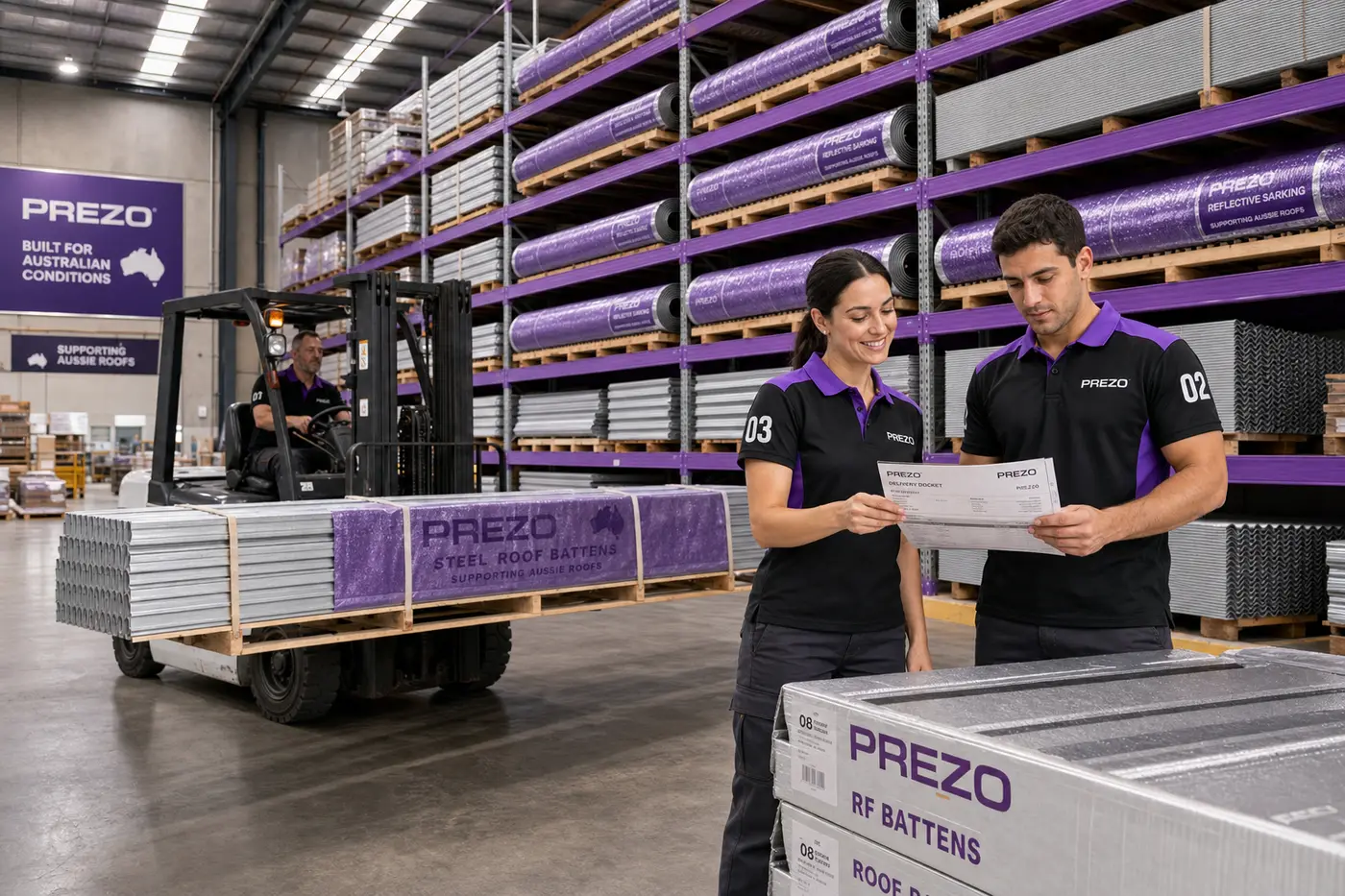
The right supply model depends entirely on the job, and the two extremes — everything picked up ad hoc from the trade counter, or everything locked into a rigid staged delivery program — both fail in predictable ways when applied to the wrong scale of job. Most jobs actually benefit from a mix of the two.
Trade counter — flexibility for smaller, variable jobs
Picking up from our Campbellfield trade counter suits jobs where exact quantities aren't fully known upfront, timing is flexible day-to-day, or the job is small enough that a staged delivery program adds coordination overhead without a real benefit. It's also the natural fit for topping up materials mid-job when an estimate ran slightly short, or for smaller maintenance and repair work where a full program supply arrangement would be overkill.
Program supply — reliability for larger, sequenced jobs
Staged program supply — delivery scheduled against construction sequence across a defined program — suits larger jobs, multi-building sites, and anything where material needs to arrive in the right quantity at the right stage without the site team managing a series of individual trade counter runs. This is particularly valuable on multi-stage commercial builds where different trades and stages need different materials at different times, and coordinating that manually would consume significant site management time. See our guide on staged delivery for large roofing programs for more detail on how this works in practice.
The hybrid approach most jobs actually use
Many real jobs aren't purely one model or the other — the bulk of the roofing pack goes through a staged program supply arrangement locked in against the construction schedule, while trade counter pickups cover incidental top-ups, unexpected shortfalls, or smaller accessory items that don't justify their own delivery slot. This hybrid approach captures programmed reliability for the bulk material while keeping flexibility for the inevitable small adjustments every real job needs.
The jobs that run into supply friction are usually the ones trying to force a large, multi-stage build entirely through ad hoc trade counter pickups, or a small, flexible repair job into a rigid program supply arrangement that doesn't suit its actual timing needs.
What program supply requires from you
Staged program supply trades flexibility for reliability — which means it requires earlier commitment to quantities and delivery timing than trade counter pickups. If a program's construction sequence is genuinely uncertain, that uncertainty needs to be flagged so delivery scheduling can build in appropriate buffer, rather than committing to a rigid schedule that construction delays will inevitably disrupt.
Choosing the right model for your job
- Small, flexible timing, uncertain final quantities → trade counter.
- Large, multi-stage, sequenced construction program → staged program supply for the bulk pack.
- Either scale, with a known risk of incidental shortfalls or top-ups → hybrid — program supply for the bulk, trade counter access for adjustments.
Talk to us about the actual scale and sequencing of your job and we'll recommend the right supply model — including a hybrid approach where that genuinely serves the job better than an all-or-nothing choice.