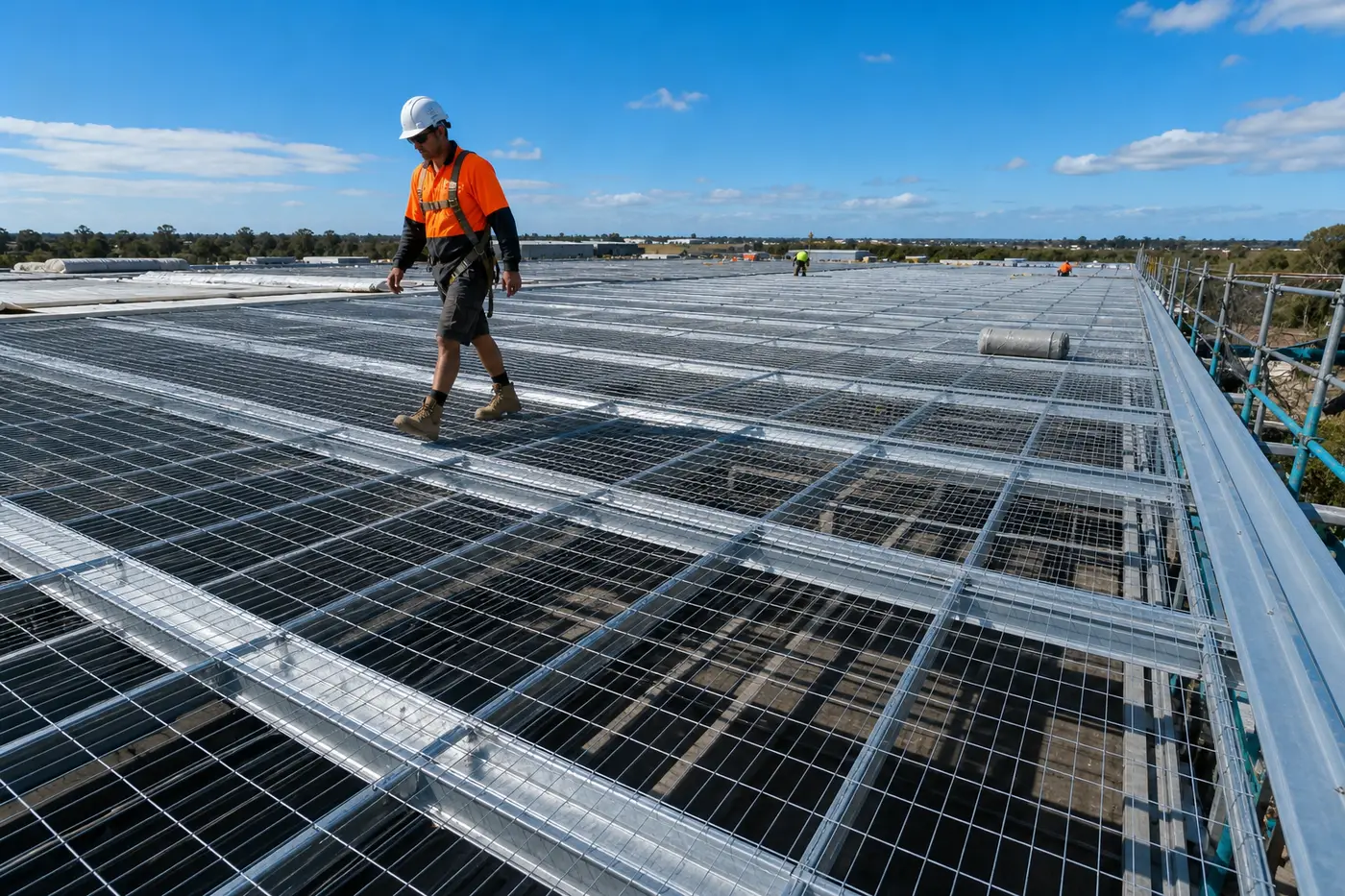
Roof safety mesh sits at the intersection of two things that are easy to get wrong on a commercial program: worker fall protection and roof build-up sequencing. AS/NZS 4389 is the standard that governs mesh performance for fall-through protection during construction and maintenance — and it's worth understanding what it actually covers before you order the wrong product off a generic supplier catalogue.
What AS/NZS 4389 actually specifies
The standard sets performance requirements for mesh used as fall-through protection beneath fragile or non-fragile roofing during construction and later maintenance access. It is not a specification for bird-proofing mesh, general debris screens, or decorative grille — those are different products with different performance criteria, and substituting one for another is a common site-level error that only becomes visible if someone falls.
Compliant safety mesh needs to be rated for the loads it may be subjected to, correctly supported at the specified span, and installed as part of a documented safe work method — mesh alone, incorrectly fixed, does not satisfy the intent of the standard.
Where mesh sits in the roof build-up
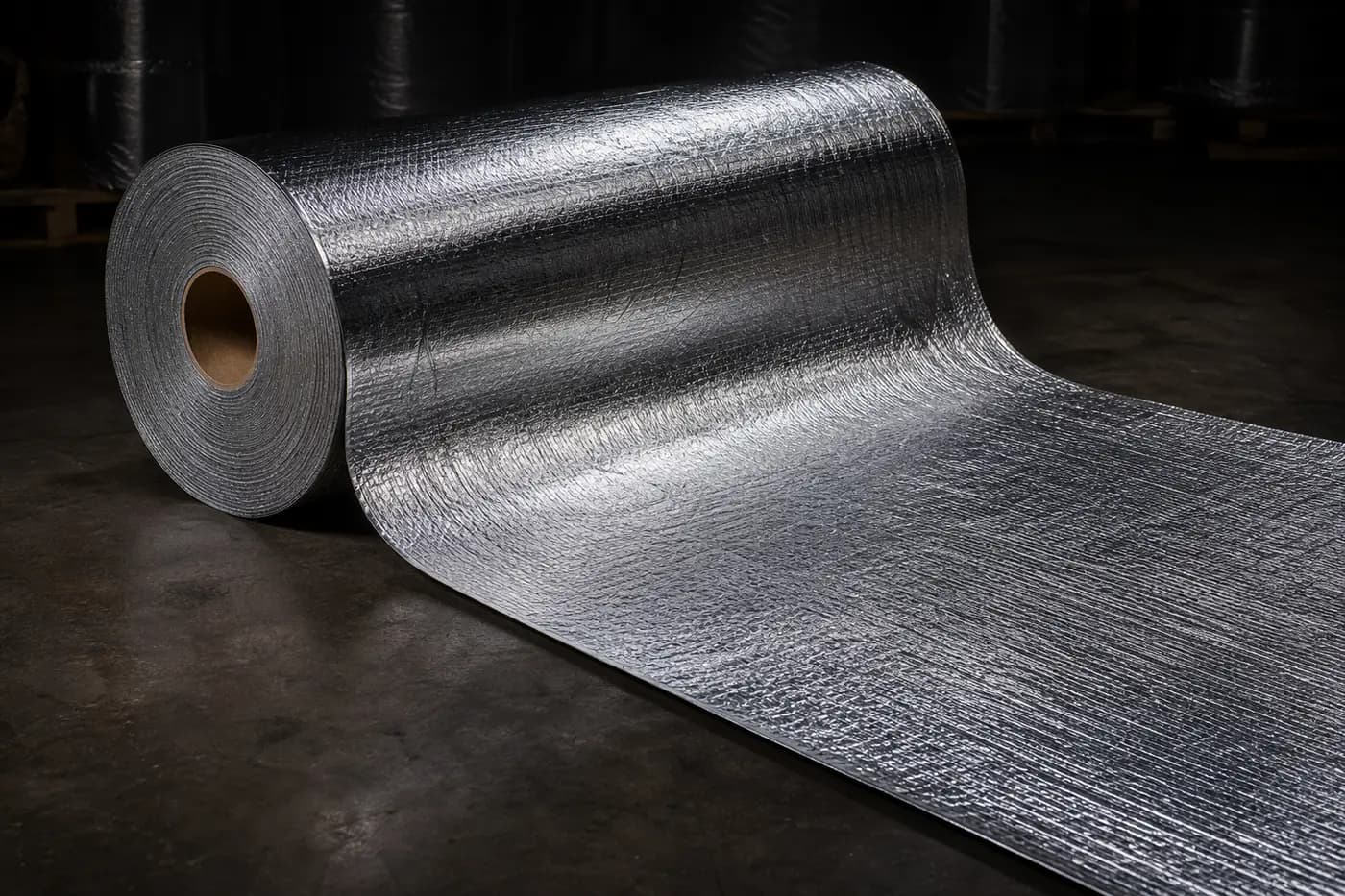
On most commercial insulated metal roofs, safety mesh sits below the insulation blanket, directly on or just above the purlins, forming a continuous safety layer across the roof plane before the blanket and sheet go on. Getting the sequence right matters for two reasons: the mesh needs to be installed and inspected before it's covered by insulation (once the blanket and sheet are on, verifying mesh coverage becomes far harder), and the insulation install needs to work around mesh supports without compromising either layer.
We see the most confusion on re-roof and re-clad jobs, where crews sometimes assume mesh isn't required because "it wasn't there originally." Current commercial construction and maintenance access requirements generally still apply regardless of what the original roof had.
Coordinating mesh with insulation and roofing programs
Because mesh, insulation and roof sheeting are typically supplied and installed in immediate sequence, pack-lotting all three from one delivery avoids a stalled crew waiting on a missing accessory. When you brief a commercial roofing pack to PREZO, tell us:
- Roof area and purlin spacing (sets mesh span and support requirements)
- Whether the mesh needs to satisfy ongoing maintenance access requirements, not just construction-phase protection
- Any site-specific safe work method statement requirements that affect mesh specification
- Sequencing — does the roofing contractor want mesh, insulation and sheet on one delivery schedule or staged separately
Common site mistakes
Substituting non-rated mesh because it "looks the same" as compliant product — mesh that hasn't been tested and rated to the standard should never be treated as fall-through protection. Skipping mesh inspection before covering — once insulation and sheet are installed, confirming mesh coverage and fixing becomes a much bigger exercise; get sign-off before covering. Treating mesh as optional on small jobs — fall-through protection requirements are generally driven by roof access and construction methodology, not job size.
Talk to us before you order
If you're unsure whether a job needs safety mesh, what grade, or how it should sequence against your insulation and roofing pack, send us the roof plan and access method. We can confirm the mesh spec alongside the rest of the roofing pack lot so nothing holds up the crew on site.