Office fit-out drawings frequently specify "acoustic batts" as a single generic line item across every internal wall, when in reality different walls in the same fit-out have very different acoustic requirements. A party wall between two tenancies and a partition wall between two open-plan desks are not the same acoustic problem, and specifying them identically usually means overspending on one and underperforming on the other.
Rw targets should drive the spec, not the other way around
Where a fit-out's acoustic report specifies an Rw (weighted sound reduction) target for particular walls — commonly party walls, meeting rooms, and any wall adjacent to a noise-sensitive use — batt density needs to be selected against that number. Higher-density acoustic batts, thermal-and-acoustic combined products, or Rw-rated system components achieve higher performance than standard building batts, but at a cost premium that isn't justified on walls without a specific acoustic requirement.
Where higher performance genuinely matters
- Party walls between separate tenancies — almost always carry a code-mandated or landlord-required Rw minimum; confirm this figure before speccing batts.
- Meeting rooms and boardrooms — confidentiality and general office comfort both benefit from higher acoustic separation from open-plan areas.
- Walls adjacent to plant rooms or mechanical risers — noise transmission from building services into occupied space is a common post-handover complaint if under-specified.
- Walls between quiet-focus zones and collaborative/loud areas in modern open-plan layouts — an increasingly common but often overlooked acoustic requirement.
Where standard performance is genuinely fine
General internal partition walls within the same open-plan tenancy, storage room walls, and walls without a specific acoustic report requirement don't need premium acoustic batt — standard building insulation batt is appropriate, and applying acoustic-grade product there is cost without benefit.
We regularly see fit-out quotes with acoustic batt specified uniformly across every internal wall "to be safe," which inflates cost without necessarily hitting the actual Rw targets that matter — because installation quality on the walls that do need it sometimes gets less attention when the spec treats everything the same.
Installation quality decides real-world performance
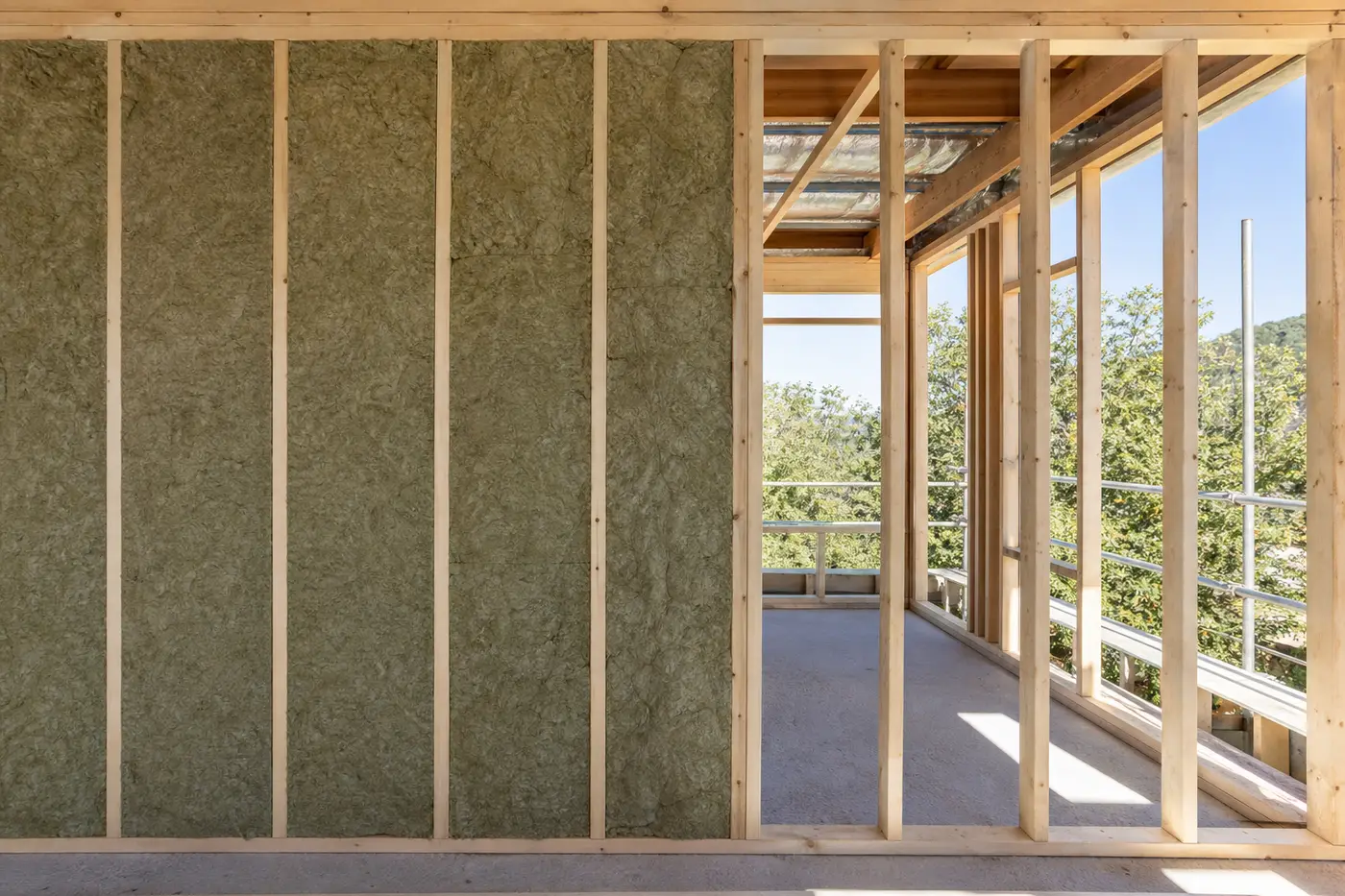
A correctly-rated acoustic batt, installed with gaps at the top, bottom or around services penetrations, will not deliver its rated Rw in practice. Full cavity fill, correct batt width for the stud spacing, and careful detailing around services and electrical boxes matter as much as the batt's laboratory rating. This is worth flagging explicitly to the installing trade on walls carrying a specific acoustic requirement — a batt correctly selected but poorly installed still fails the target.
Confirming the spec before ordering
- Pull the Rw target for each wall type from the acoustic report, not a general assumption
- Match batt density/grade to each specific target rather than one grade across the fit-out
- Flag installation quality requirements (full fill, sealed penetrations) explicitly on acoustically critical walls
- Confirm whether combined thermal/acoustic batts are more cost-effective than separate products where both properties matter
Send us the acoustic report extract alongside the fit-out plan and we'll help match batt selection wall-by-wall to the actual targets, rather than a flat spec across every partition.