Mechanical services drawings often specify "duct wrap" as a single line item, without distinguishing whether the job needs thermal performance, acoustic performance, or both. On plant rooms and risers adjacent to occupied space, that ambiguity tends to surface as a noise complaint after handover — not a great time to discover the spec was incomplete.
Two different jobs, two different products
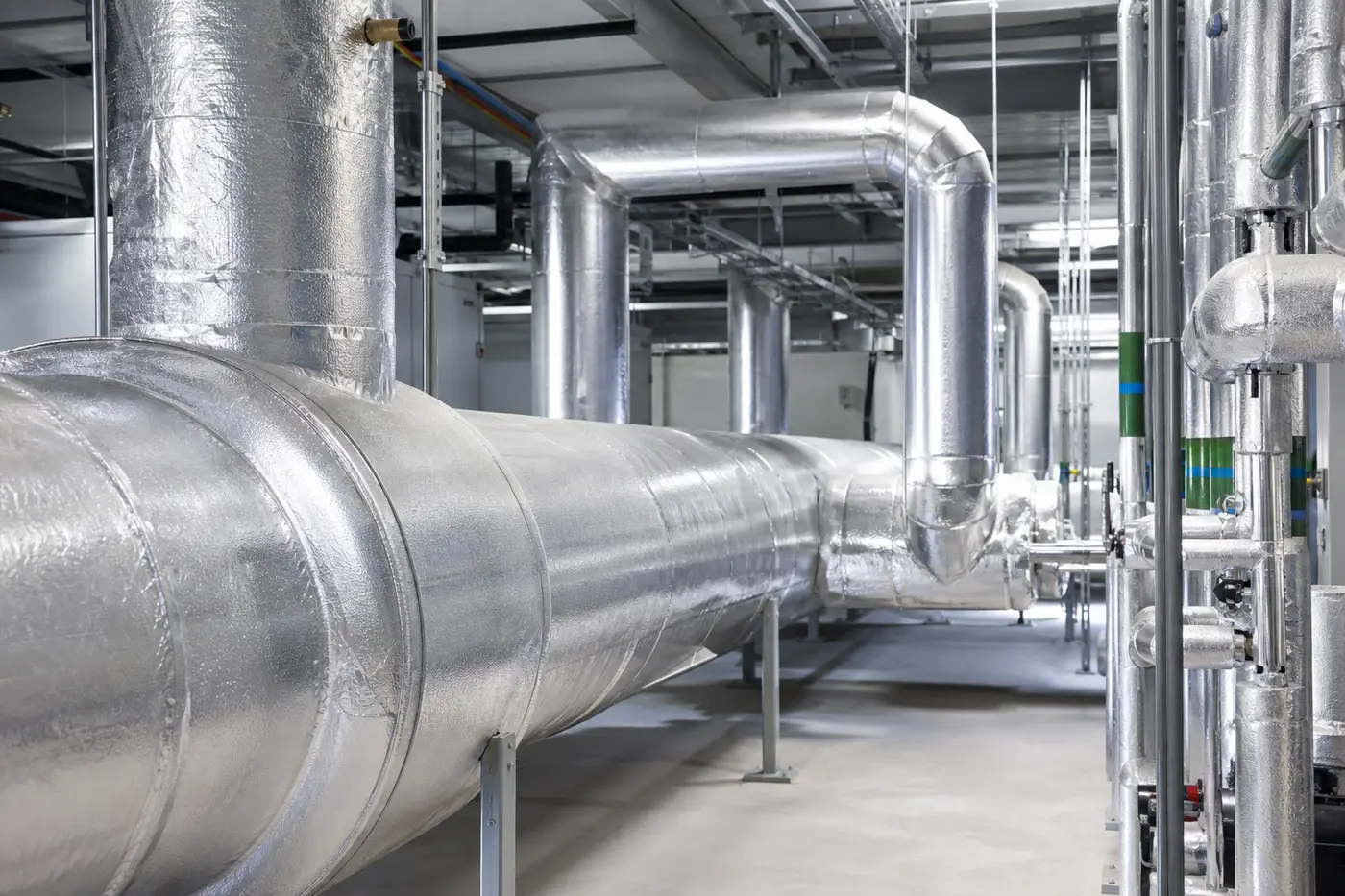
Thermal duct wrap manages heat loss/gain and condensation on the duct surface — this is the default concern on most standard commercial HVAC runs, where the goal is keeping conditioned air conditioned and stopping condensation dripping from cold supply ducts in humid plant spaces. Acoustic duct lagging is built to reduce noise breakout from the duct into surrounding space — this becomes the priority on plant rooms, mechanical risers, and any ductwork running close to offices, meeting rooms, or residential-adjacent tenancies.
Reading the failure mode backwards
If a project brief mentions condensation risk, energy code compliance, or duct runs through unconditioned roof or ceiling space, thermal wrap is the primary driver. If the brief mentions noise complaints, mechanical rooms adjacent to occupied tenancies, or a specific noise transmission (Rw or similar) target in the building's acoustic report, lagging with real acoustic performance — not just a thicker thermal wrap — is what's actually required.
Thicker thermal wrap is not a substitute for acoustic lagging. A duct that's "well insulated thermally" can still transmit significant noise if the wrap wasn't selected or installed for acoustic performance specifically.
When you need both
Many commercial fit-outs genuinely need thermal and acoustic performance on the same duct run — a supply duct passing through a ceiling void above an office, for example, needs to avoid condensation drip and avoid transmitting fan or airflow noise into the space below. Combined systems, or a mass-loaded barrier layer added to a standard thermal wrap, address both requirements without over-speccing the whole run at the highest acoustic grade where it isn't needed.
Specifying by zone, not by project
Rather than applying one duct wrap spec across an entire mechanical services package, break the ductwork into zones:
- Plant room and immediate risers — highest acoustic priority, likely combined thermal/acoustic or mass-loaded barrier.
- Ceiling void runs above occupied space — moderate acoustic priority alongside standard thermal performance.
- Unconditioned roof space or non-adjacent runs — thermal performance only is usually sufficient.
Coordinating with the acoustic consultant
If the project has an acoustic engineer's report with specific transmission targets, get the duct wrap spec cross-checked against those targets before ordering — a generic "commercial grade" duct wrap claim on a supplier catalogue doesn't automatically satisfy a specific Rw or sound reduction requirement in a report. When in doubt, send us the mechanical services drawing and any acoustic report extracts and we'll help match product to zone rather than guessing at a one-size spec.