Nominal R-value is measured on an uncompressed sample in a lab. Actual, in-service R-value is whatever the blanket achieves once it's screwed down under a metal sheet, on a purlin, in the weather. Those two numbers are not the same — and the gap between them is exactly what roof spacer systems are designed to close.
What actually happens without a spacer
When a roofing blanket sits directly between the purlin and the sheet, the fastener compresses the insulation at every fixing point. Over a typical commercial roof with fasteners at 300–600mm centres along every purlin line, that's a lot of compression points across the total roof area. Compressed glasswool loses loft, and loft is what creates the still-air layer that gives insulation its thermal performance. The result: a blanket rated at R3.6 in the lab can perform meaningfully below that once installed flat under standard fixing.
How spacer systems fix it
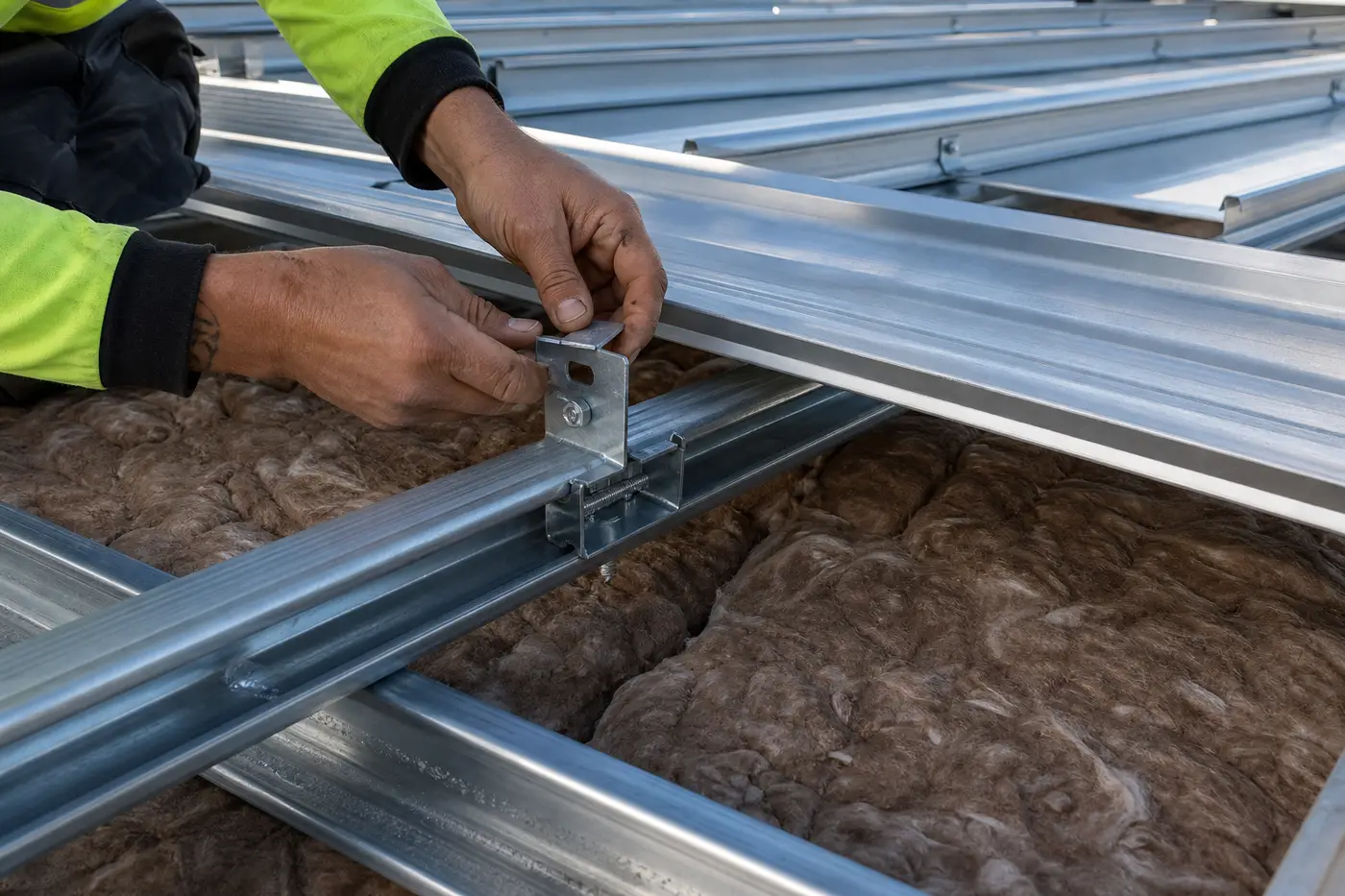
A spacer system — sometimes supplied as an adjustable bracket or strip that sits on top of the purlin — lifts the sheet fixing point clear of the insulation layer. The blanket recovers to its full uncompressed thickness across the entire roof plane, not just between fasteners. On jobs where the specification calls for a genuine R-value (not just "roofing blanket, unspecified"), a spacer system is often the difference between meeting NCC Section J on paper and meeting it in the finished building.
When spacers earn their place in the spec
- New commercial builds targeting a specific total R-value — if the design relied on the blanket's nominal rating, compression loss can push the finished building below target.
- Re-roofs and re-clads — the original purlin spacing was designed for the old roof, not for holding a modern insulation thickness at full loft. Spacers correct for that mismatch without needing to alter the structure.
- Acoustic-sensitive buildings — compressed insulation loses acoustic performance alongside thermal, which matters on schools, offices and mixed-use industrial/commercial sites.
- Higher R-value blankets (R3.6+) — the thicker the blanket, the more there is to lose to compression, and the more a spacer system pays for itself in delivered performance.
On a straightforward unlined shed with a modest R-value target, a spacer system is often unnecessary cost. On an occupied building chasing a specific NCC compliance number, skipping it can mean the as-built performance simply doesn't match what was submitted for approval.
Specifying height correctly
Spacer height needs to be matched to the blanket thickness actually being installed — a spacer sized for an R2.0 blanket won't fully recover loft on an R3.6 product, and oversizing wastes material and adds unnecessary roof build-up height. Confirm the final blanket selection before locking in spacer height, not the other way around.
Installation sequencing
Spacer systems change the install sequence slightly — purlins get the spacer bracket first, blanket goes in next, then the sheet fixes through the spacer rather than directly through the insulation. Brief this to the roofing crew before delivery lands on site; a spacer system that arrives without the crew understanding the revised fixing sequence tends to get skipped under program pressure.
The bottom line for specifiers
If a project's energy compliance documentation relies on the nominal R-value of a roofing blanket, and standard purlin-fixed installation will compress that blanket, a spacer system is the only way to actually deliver the number on the certificate. Talk to us about pack-lotting spacers alongside the ThermaRoof range so the crew isn't waiting on a missing accessory mid-install.